
Equine-Assisted Therapy for Mental Health Conditions – Harnessing the Power of Horses
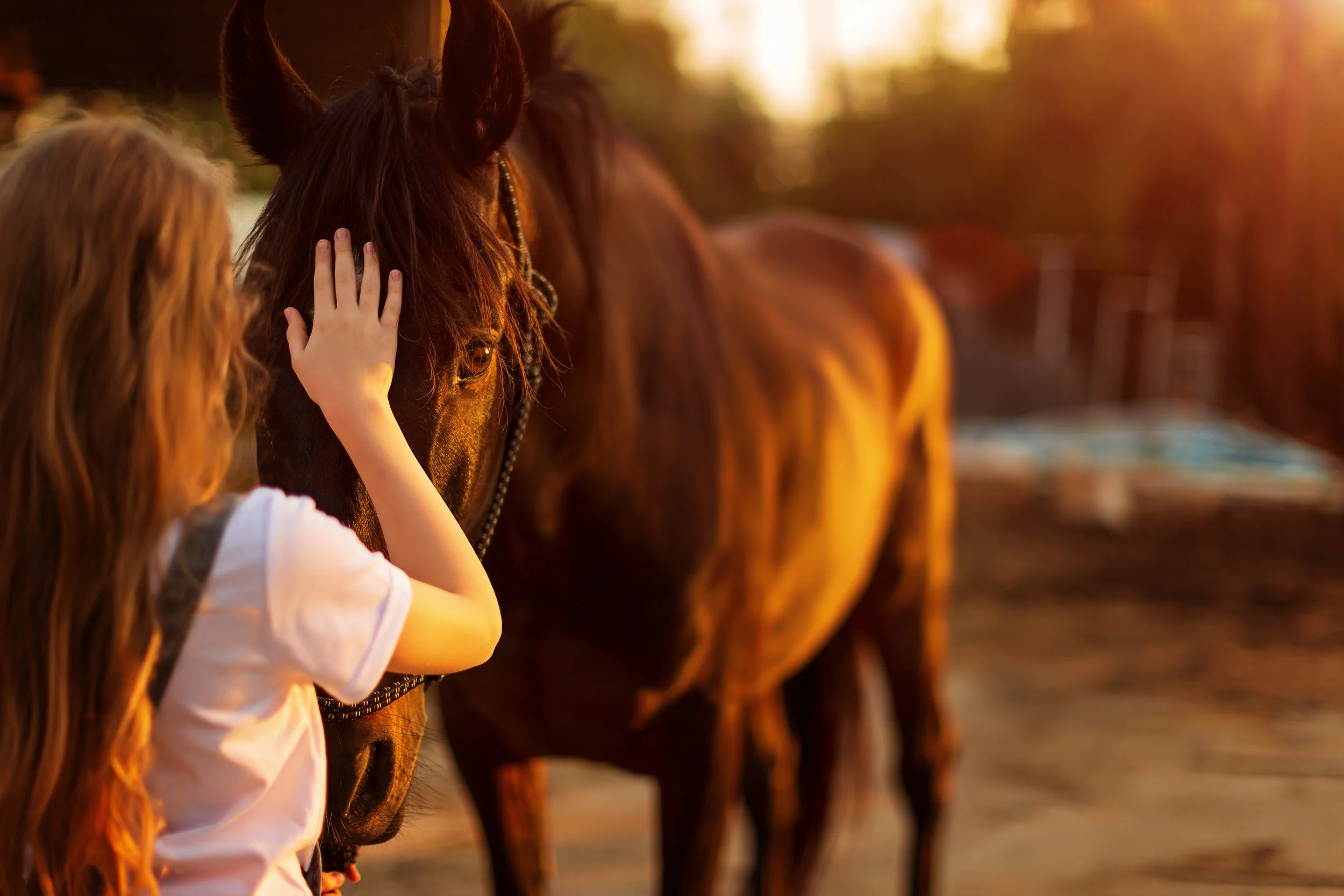
“I believe horses and humans have a connection that draws us to each other. I believe in their own way they know we need them and they are pleased to be our partner, whether it be in work or in sport.”
- McLain Ward, Olympic Equestrian
By Karen Govel McDermott, Rural Minds Content Development Lead
Earlier this year, Rural Minds partnered with the nonprofit organization Horses for Mental Health in the making of a video to help increase awareness and improve access to programs that incorporate horses for mental health in rural America. You can watch this powerful story of resilience and healing here: Supporting Mental Health in Rural Communities.
In this blog, you’ll learn how involving horses in psychotherapy and counseling sessions can help individuals with mental health challenges and also find additional resources for equine-assisted therapy.
What Is Equine-Assisted Therapy?
Equine-assisted therapy involves participating in activities with horses under the supervision of a mental health professional and a horse trainer. Also known as equine-assisted psychotherapy, equine-assisted therapy is used to promote the mental and emotional healing of children and adults with mental health conditions including:
Rather than replacing traditional therapies, equine-assisted therapy is used together with other types of mental health treatments. Equine-assisted therapy may also be used to help individuals and families cope with grief, loss, and relationship struggles.
What Is It About Horses That Makes Them Effective Therapy Animals?
If you’ve ever been fortunate enough to have interacted with horses, you understand why they can be such effective therapy animals. Their size and presence alone can be awe-inspiring. Yet despite their size, horses tend to make individuals feel safe and calm while engaged in equine-assisted therapy sessions.
Horses are prey animals, which makes them highly sensitive to their surroundings. And when horses are near humans, they tune into them and their emotions, often mirroring feelings and behaviors. That’s one reason why many people find it easy to build a connection with a horse. In addition, interacting with horses during equine-assisted therapy sessions can help bring to the surface memories, attitudes, beliefs, and unresolved traumas that may be affecting a person’s relationships and mental health. Equine-assisted therapy sessions can also help individuals gain confidence, resilience, self-awareness, and empathy.
What Do Equine-Assisted Therapy Sessions Typically Involve?
During equine-assisted therapy sessions, individuals typically observe horses’ behaviors and interact with them through care-taking activities – such as grooming and feeding. They may also lead horses through paths and obstacles. Although many equine-therapy sessions are ground-based, some may include riding.
Throughout equine-assisted therapy sessions, mental health professionals lead specific activities for engaging with horses that address their patients’ treatment goals. For example, mental health professionals will ask questions and make observations that connect their patients’ interactions with horses to life experiences, which can help increase personal insights to challenges and effective ways to confront those challenges.
Using Equine-Assisted Therapy to Help Veterans Overcome Trauma
Helping veterans overcome the traumas they’ve experienced during military service is an example of how equine-assisted therapy can be effective. Post-traumatic stress disorder (PTSD) is a mental health condition that people can develop if they’ve experienced or witnessed a traumatic event, such as combat, a terroristic attack, or sexual assault. Experiencing anxiety or depression, or experiencing flashbacks or nightmares, are among the symptoms of PTSD that can interfere with daily functioning. For many veterans, standard mental health treatments for PTSD don’t work.
A recent Columbia University-led study showed that equine-assisted therapy helped to “jump-start” the healing process for veterans affected by PTSD. In the study, 63 veterans diagnosed with PTSD participated in weekly 90-minute sessions that were co-led by a mental health professional and an equine specialist. More than 50% of the veterans demonstrated a reduction in PTSD and depression symptoms after the therapy sessions and at the three-month follow-up.
Bringing veterans with PTSD together with horses though equine-assisted therapy can be a powerful way to help reduce the effects of trauma. Equine-assisted therapy sessions are typically designed to reflect real-life issues and situations that can be associated with strong emotions like anger, and help veterans choose healthier reactions to the challenges they face in life.
Gateway Family Services – the nonprofit equine facility in Potomac, Illinois, where Rural Minds joined Horses for Mental Health to film the video Supporting Mental Health in Rural Communities – provides a Trauma Focused Equine-Assisted Therapy program for veterans. Click here to learn more about how this program helps veterans heal.
Is Equine-Assisted Therapy a Good Fit for You?
By using equine-assisted therapy to complement traditional mental health treatments, horses can play an important role in helping people overcome their emotional and mental health challenges. Be sure to consult with a mental health provider to help determine if equine-assisted therapy may be right for you or a loved one.
Additional Equine-Assisted Therapy Resources: