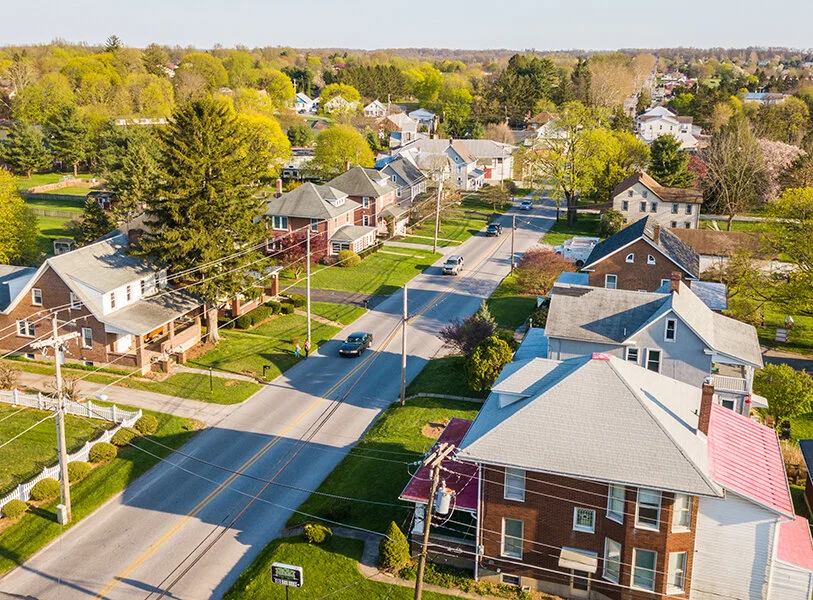
Rural Health Includes Mental Health
Sometimes what you can’t see hurts the most.™
The third Thursday of every November has been designated as National Rural Health Day and is dedicated to addressing the unique healthcare challenges that rural residents face.
But every day of the year, it’s important to recognize that rural health includes mental health.
President Biden Issued A Proclamation on National Rural Health Day in 2022
There is a mental health emergency in rural America
Compared to people who live in urban areas, rural Americans experience higher rates of depression and suicide, but are less likely to access mental healthcare services. (1)
Suicide rates among people living in rural areas are 64% to 68% higher compared to people living in large urban areas. (2)
Rural areas have 20% fewer primary care providers compared to urban areas (3) and more than 25 million rural Americans – almost half of rural residents – live in mental health professional shortage areas: (4)
- 65% of rural counties lack a psychiatrist.
- 81% of rural counties lack a psychiatric nurse practitioner. (5)
- Nearly 30% of rural Americans lack internet in their homes (6) which eliminates the option of telehealth.
Another factor that negatively affects mental health is the management of comorbidities that can lead to anxiety, depression or other mental health challenges, or can exacerbate an existing mental illness.
The coronavirus pandemic had a major detrimental impact on mental health in rural America, with 54% of rural adults and 71% of younger rural adults between the ages of 18 and 34 years admitting that the pandemic has affected their mental health. (7)
There are additional challenges to mental health that are often inherent in a rural lifestyle, which can include:
Self-imposed barrier of asking for help when taught to pursue self-reliance as a virtue;
Lack of trust in anyone to maintain confidentiality in a small, close-knit community;
Fear of negative judgment from others as being incompetent or less capable;
Difficulty getting an appointment with limited availability of mental health professionals;
Time and transportation required for long-distance travel to meet with a mental health professional;
Lack of adequate health insurance coverage;
Feeling of isolation without having access to talk with someone outside of the community who understands mental health challenges in rural America;
Weakening agricultural economy, financial instability; and,
A solitary way of life.
Stigma is part of the probleM
Some people in rural communities don’t understand or accept that mental illness is a disease. Rather, a mental illness can be viewed as a personal weakness or character flaw. A lot of the stigma around mental illness results in unwarranted shame, which adds to the burden for someone already suffering from mental illness. Sometimes what you can’t see hurts the most.
Awareness is part of the solution
Overcome stigma in rural communities by raising awareness that mental illness is a disease – just like cancer, heart disease or diabetes.
Normalize conversations about mental illness as you would with other diseases.
Talk openly about lived experiences with mental health challenges.
Recognize that sharing experiences can be an important first step for people to seek help for their own mental health challenges and encourage others to recognize when they are struggling.
Be honest with yourself and others in acknowledging when help is needed.
Get help: Call or Text 988
Call or text 988 or chat at 988lifeline.org if you are in crisis or are worried about a loved one who may need crisis support, which can include having thoughts of suicide or experienceing a mental health or substance abuse crisis. This service is free and confidential.
If there is a life-threatening ermegency, call 911 or go to the nearest emergency room.
Get help with mental health challenges:
Access free mental health crisis resources
Access free mental health resources - by topic
Access free mental health resources - A to Z
Sources:
Capriotti T, Pearson T, Dufour L. Health Disparities in Rural America: Current Challenges and Future Solutions. Clinical Advisor (February 18, 2020). Accessed at: https://www.clinicaladvisor.com/home/topics/practice-management-information-center/health-disparities-in-rural-america-current-challenges-and-future-solutions/
Centers for Disease Control and Prevention: Disparities in Suicide (2022). Accessed at: https://www.cdc.gov/suicide/facts/disparities-in-suicide.html
Donglan Zhang, PhD1; Heejung Son, MS1,2; Ye Shen, PhD2; et al Assessment of Changes in Rural and Urban Primary Care Workforce in the United States From 2009 to 2017, Original Investigation Health Policy, JAMA, October 28, 2020.
Designated Health Professional Shortage Areas Statistics Second Quarter of Fiscal Year 2021 Designated HPSA Quarterly Summary (2021). Washington, DC, Health Resources and Services Administration. Accessed at: https://data.hrsa.gov/Default/GenerateHPSAQuarterlyReport
Andrilla CHA, Patterson DG, Garberson LA, Coulthard C, Larson EH. Geographic Variation in the Supply of Selected Behavioral Health Providers. Am J Prev Med. 2018 Jun;54(6 Suppl 3): S199-S207. doi: 10.1016/j.amepre.2018.01.004. PMID: 29779543.
Vogels, E. Some digital divides persist between rural, urban and suburban America. Pew Research Center. (August 19, 2021). Accessed at: https://www.pewresearch.org/fact-tank/2021/08/19/some-digital-divides-persist-between-rural-urban-and-suburban-america/1
Impacts of COVID-19 on Rural Health (December, 2020). American Farm Bureau Administration. Accessed at: https://www.fb.org/files/Impacts_of_COVID-19_on_Rural_Mental_Health_1.6.21.pdf

Read the NAMI blog post “Confronting Mental Health Challenges in Rural America” from Rural Minds Founder and Chairman Jeff Winton.
Grow With Us!