
What is Postpartum Depression?
Rural Minds Mental Health Condition Fact Sheets
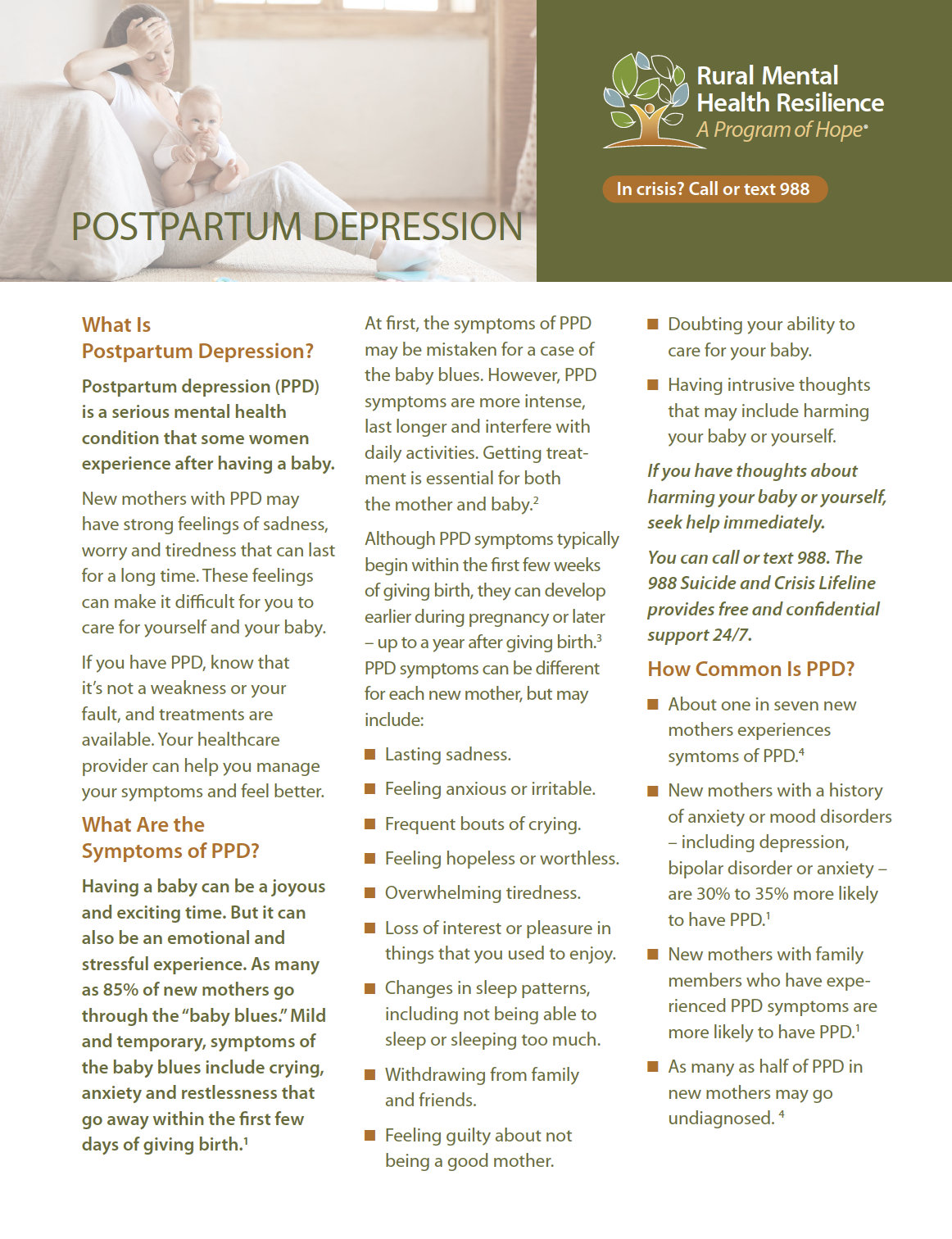
Postpartum depression (PPD) is a serious mental health condition that some women experience after having a baby.
New mothers with PPD have strong feelings of sadness, worry and tiredness that can last for a long time. These feelings can make it difficult for you to care for yourself and your baby.
If you have PPD, know that it’s not a weakness or your fault, and treatments are available. Your healthcare provider can help you manage your symptoms and feel better.
What Are the Symptoms of PPD?
Having a baby can be a joyous and exciting time. But it can also be an emotional and stressful experience. As many as 85% of new mothers go through the “baby blues.” Mild and temporary, symptoms of the baby blues include crying, anxiety and restlessness that go away within the first few days of giving birth.(1)
At first, the symptoms of postpartum depression may be mistaken for a case of the baby blues. However, PPD symptoms are more intense, last longer and interfere with daily activities. Getting treatment is essential for both the mother and baby.(2)
Although PPD symptoms typically begin within the first few weeks of giving birth, they can develop earlier during pregnancy or later – up to a year after giving birth.(3) PPD symptoms can be different for each new mother, but may include:
· Lasting sadness.
· Feeling anxious or irritable.
· Frequent bouts of crying.
· Feeling hopeless or worthless.
· Overwhelming tiredness.
· Loss of interest or pleasure in things that you used to enjoy.
· Changes in sleep patterns, including not being able to sleep or sleeping too much.
· Withdrawing from family and friends.
· Feeling guilty about not being a good mother.
· Doubting your ability to care for your baby.
· Having intrusive thoughts that may include harming your baby or yourself.
If you have thoughts about harming your baby or yourself, seek help immediately.
You can call or text 988. The 988 Suicide and Crisis Lifeline provides free and confidential support 24/7.
How Common Is PPD?
About one in seven new mothers experience postpartum depression.(4)
New mothers with a history of anxiety or mood disorders – including depression, bipolar disorder or anxiety – are 30% to 35% more likely to have PPD.(1)
New mothers with family members who have experienced PPD symptoms are more likely to have PPD.(1)
As many as half of PPD in new mothers may go undiagnosed.(4)
How Is PPD Diagnosed?
A diagnosis is made after your healthcare provider takes a careful history of your mood symptoms. Your healthcare provider will likely talk to you about your thoughts and feelings to help determine if you have a case of baby blues or postpartum depression. They may also order medical tests to rule out other health conditions. In addition, they may refer you to a mental health professional for evaluation.
How Is PPD Treated?
Many women experience postpartum depression. The good news is that PPD is treatable, help is available and you can feel better. Take the first step towards healing by reaching out for help to your healthcare provider, family, friends and other people you trust.
Depending on the severity of your symptoms, treatments and strategies for managing PPD symptoms include:(5)
Psychotherapy – Also known as talk therapy, this involves counseling sessions with a mental health professional who can help you understand and cope with your emotions and challenges.
Medications – In some cases, your healthcare provider may prescribe medications to help you manage your symptoms.
Self-care – It’s important to take care of yourself, such as getting enough sleep, eating a nutritious, well-balanced diet and exercising regularly, such as taking walks.
Support groups – Joining a support group with others who are experiencing PPD can provide understanding and let you know that you’re not alone.
If you or a new mom you know is struggling, call or text the National Maternal Mental Health Hotline at 1-833-TLC-MAMA (1-833-852-6262). It is a free, confidential, 24/7 hotline for pregnant and new mothers, with professional counselors who speak English and Spanish. In addition to real-time support and information, the National Maternal Mental Health Hotline provides referrals to local and telehealth providers and support groups.
For more information about PPD:
National Maternal Mental Health Hotline
https://mchb.hrsa.gov/national-maternal-mental-health-hotline
Office on Women’s Health: Talking Postpartum Depression
https://www.womenshealth.gov/TalkingPPD
PostpartumDepression.org
https://www.postpartumdepression.org/
Postpartum Support International
https://www.postpartum.net
References:
1. Johns Hopkins Medicine. Baby Blues and Postpartum Depression: Mood Disorders and Pregnancy. Accessed at: https://www.hopkinsmedicine.org/health/wellness-and-prevention/postpartum-mood-disorders-what-new-moms-need-to-know
2. American Psychiatric Association. What Is Perinatal Depression? October 2023. Accessed at: https://www.psychiatry.org/patients-families/peripartum-depression/what-is-peripartum-depression
3. U.S. Department of Health & Human Services – Maternal & Child Health: Depression During and After Pregnancy. 2019. Accessed at: https://mchb.hrsa.gov/sites/default/files/mchb/programs-impact/depression-during-after-pregnancy-en.pdf
4. S Mughal, Y Azhar, W Siddiqui. Postpartum Depression. StatPearls. October 7, 2022. Accessed at:
5. U.S. Department of Health & Human Services – Office on Women’s Health. Talking Postpartum Depression. 2024. Accessed at: https://www.womenshealth.gov/TalkingPPD