
Rural Suicide Awareness And Prevention
"If you find you can't help yourself, there's no shame in asking others for help. Sometimes asking for help is just as heroic as giving it." – Chris Colfer

A partnership with Rural Minds and the National Grange
Rural Suicide Awareness and Prevention Video
“Talk Saves Lives” Training for Rural Suicide Awareness and Prevention
Download/print this two-page Suicide Prevention Educational PDF with some warning signs of suicide and a response to someone who might be thinking about suicide.
Download/print this one-page Suicide Prevention Flyer to post on bulletin boards or distribute at events to raise awareness of suicide prevention and promote calling or texting 988 – the new suicide and crisis lifeline that’s free and confidential.
Learn some of the warning signs of suicide.
Access additional relevant content: Suicide Awareness and Prevention - Questions and Answers
If you or someone you know is suicidal or in emotional distress, call or text 988 for 24/7 support.
If this is a life-threatening emergency, call 911 or go to the nearest hospital emergency room.
You can also chat at 988lifeline.org if you are in crisis or if you are worried about a loved one who may need crisis support, including having thoughts of suicide or experiencing a mental health or substance use crisis.
Suicide is a leading cause of death across the US, with suicide rates among people living in rural areas 64 to 68 percent higher than those in large urban areas. (2) Rural Minds and the National Grange are partnering to provide information and resources to help reduce suicide in rural America through the Growing Hope Together Suicide Awareness and Prevention program.
Our shared goal is to raise awareness about suicide and share important information to ensure access to mental health crisis and suicide prevention resources.
Keep in mind that just one conversation can save a life!
Suicide is a leading cause of death in the U.S., accounting for nearly 46,000 deaths in 2020 – approximately one death by suicide every 11 minutes. During that same year, more than 12 million adults seriously thought about suicide. (1)
Suicide Rates in Rural Counties Versus Urban Counties
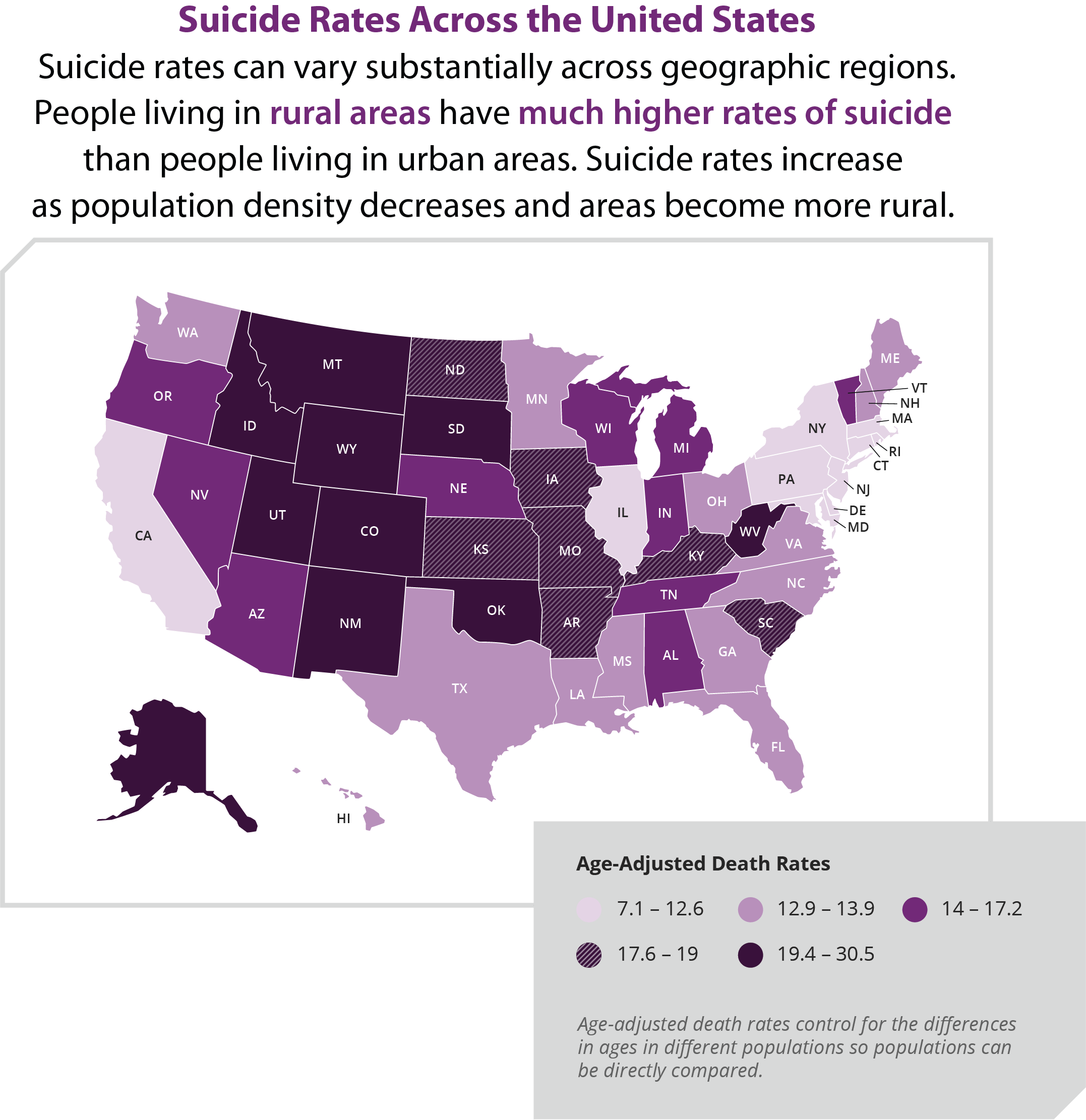
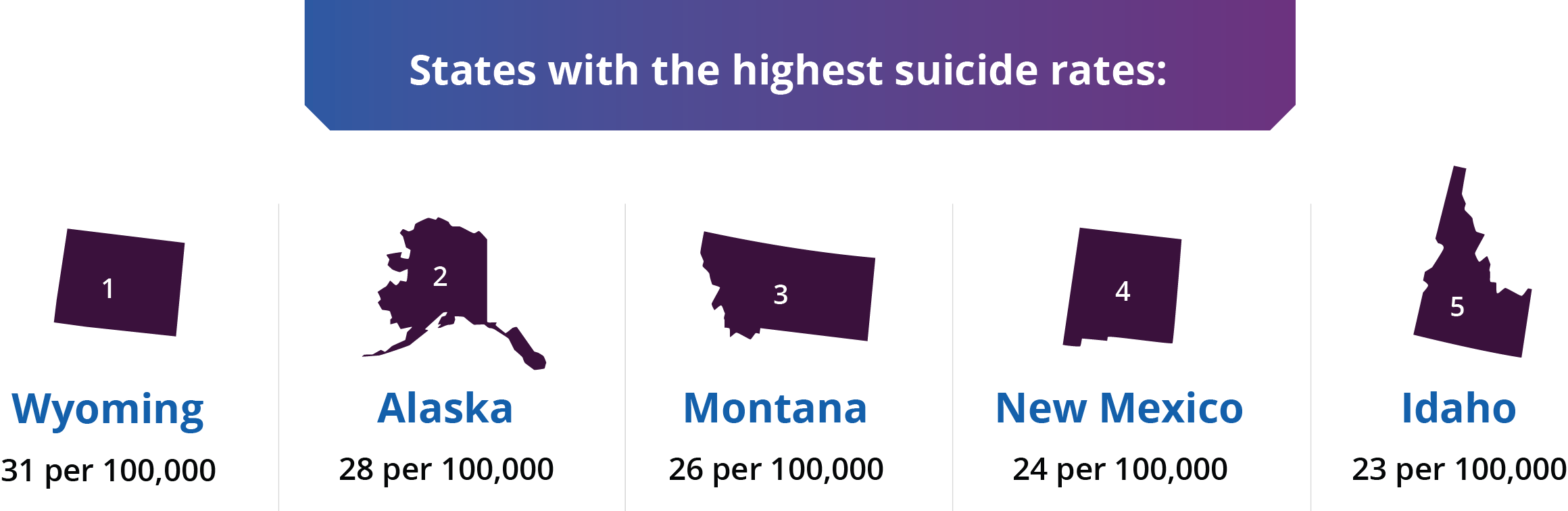
Graphic: Centers for Disease Control and Prevention
4 Common Myths about Suicide
There are many myths and misunderstandings about suicide, which can act as barriers to someone seeking help for themselves or someone they love who is in crisis. Here are four of the most common myths about suicide:
Myth #1: Talking about suicide increases the chance that people will act on it.
Fact: Starting a conversation about suicide with someone you think may be at risk can actually decrease suicidal thoughts. Talking about suicide gives that person the opportunity to share what they are struggling with and have a better chance of finding solutions other than suicide.
Myth #2: People who talk about suicide are just looking for attention.
Fact: People who die by suicide often talk about it first. That’s why it’s important to always take suicidal talk seriously. It’s true that they may be seeking attention, but it is likely a call for help. And the attention that you give them may actually save their lives.
Myth #3: Once a person decides to die by suicide, you can’t stop it.
Fact: People who are suicidal can be helped. And suicide is preventable in many cases. Because a suicidal crisis can be short-lived, encouraging someone you suspect may be suicidal to talk and staying with them to provide support are examples of immediate ways to help. In addition, ensuring that they get the professional help they need following the crisis – such as counseling and mental healthcare – is also essential.
Myth #4: Alcohol or drug abuse is not associated with suicide.
Fact: The use of alcohol and/or drugs can increase the risk of suicide because it typically decreases inhibitions and makes a person more likely to act on impulse and without thinking.
The suicide rate among people living in rural counties is higher compared to people who live in urban counties, according to the Centers for Disease Control and Prevention (CDC). (2) This is due, in part, to mental healthcare barriers that exist in rural communities, such as fewer healthcare providers and a lack of access to broadband internet and digital healthcare.
In addition, many other factors can impact suicidal risk. Although anyone can have suicidal thoughts – regardless of gender, age, or social status – there are certain risk factors that can impact suicidal risk.
View CDC infographic about groups at higher risk of suicide here.
Know The Risk Factors
Suicide risk factors include:
• A known chronic or serious mental health condition
• A family history of suicide
• Substance use and/or alcohol intoxication
• Access to firearms
• A history of trauma or abuse
• A recent tragedy or loss
• Prolonged stress
Recognize the Warning Signs
There are often warning signs that may help you recognize if someone you care about is at risk for suicide. You can’t always see the pain someone is feeling; however, many people may show signs that they are thinking about suicide in their conversations, actions, or social media posts. These warning signs may include:
• Talking about wanting to die
• Researching ways to die
• Talking about feelings of hopelessness, being trapped, or not having a reason to live
• Talking about being a burden to others
• Talking about being in unbearable emotional or physical pain
• Behaving recklessly
• Expressing rage or talking about seeking revenge
• Increasing the use of drugs or alcohol
• Sleeping too little or too much
• Withdrawing from friends and relatives
Provide Support in a Crisis
If you see warning signs that someone you care about is struggling, in crisis, and may harm themselves, trust your instincts and speak up:
1. Start the conversation. Although it may be difficult, be direct and ask the person you are concerned about if they are thinking about suicide. Then, listen and let them know you care. Talking about suicide can actually help reduce suicidal thoughts.
2. Do a safety check. If you think someone may harm themselves, try to restrict their access to lethal items, such as weapons and medications.
3. Reach out for help. If you’re worried that someone you know is experiencing an emotional, mental health, or substance use crisis, speak up and seek help. Let that person know that you are contacting a professional (e.g., a doctor, psychiatrist, psychologist, counselor, or social worker). You can call or text 988 or text 988lifeline.org for free and confidential emotional support and crisis resources, 24 hours a day, seven days a week.
All of us can play a role in suicide prevention. By recognizing the warning signs, starting a conversation, and reaching out to suicide prevention resources for information and support, you have the power to make a difference and help save a life.
Confront Suicidal Thoughts
If you are having thoughts of suicide, seek help. Call the 988 crisis line or reach out to a trusted friend or relative. Keep in mind that suicidal thoughts may be a symptom of a mental health disorder, which can be treated and improve over time. That’s why it’s so important to make an appointment with a healthcare professional to talk about what’s causing suicidal thoughts.
The resources listed below provide valuable suicide prevention information and support.
Access Suicide Prevention Resources*
Download/print this two-page Suicide Prevention Educational PDF with some warning signs of suicide and a response to someone who might be thinking about suicide.
Download/print this one-page Suicide Prevention Flyer to post on bulletin boards or distribute at events to raise awareness of suicide prevention and promote calling or texting 988 – the new suicide and crisis lifeline that’s free and confidential.
988 Suicide & Crisis Lifeline
The 988 Suicide & Crisis Lifeline (formerly known as the National Suicide Prevention Lifeline) provides free and confidential emotional support to people in suicidal crisis or emotional distress 24 hours a day, 7 days a week, across the United States. The 988 Lifeline comprises a national network of local crisis centers. They are committed to improving crisis services and advancing suicide prevention by empowering individuals, advancing professional best practices, and increasing awareness. Call or text 988 or chat at 988lifeline.org.
American Foundation for Suicide Prevention (AFSP)
With local chapters in all 50 states, AFSP is a voluntary health organization that is dedicated to saving lives and bringing hope to people affected by suicide.
#BeThe1to
#BeThe1to is the 988 Suicide & Crisis Lifeline’s message for spreading the word about actions we can all take to prevent suicide.
National Alliance on Mental Illness (NAMI) – Kids, Teens and Young Adults
On this webpage, NAMI has compiled information and resources about what you need to know to help young people get the help they need.
Rural Health Information Hub: Rural Response to Farmer Mental Health and Suicide Prevention
Overview of stress factors affecting farmers and ranchers with extensive information for understanding mental health concerns, programs to address mental health, and key stakeholder organizations.
Suicide Hotline in Spanish: Ayuda En Español
The 988 Suicide & Crisis Lifeline provides free and confidential emotional support to people in suicidal crisis or emotional distress 24/7. To reach the Spanish language line, press 2 after dialing 988.
Suicide.org – Suicide Hotlines by State
Suicide.org is a nonprofit organization that aims to prevent suicides, support suicide survivors, and educate the public about suicide. At this site, find suicide awareness and support at suicide hotlines listed by state.
Suicide Prevention: Indian Health Services (IHS)
Information from the Federal Health Program for American Indians and Alaska Natives through cooperation among tribal, federal, and other partners to maximize effectiveness of services and to protect individuals against suicide risk.
Suicide Prevention Resource Center (SPRC)
SPRC is a federally supported resource center devoted to advancing the implementation of the National Strategy for Suicide Prevention.
To Write Love on Her Arms
TWLOHA is a non-profit movement dedicated to presenting hope and finding help for people struggling with depression, addiction, self-injury, and suicide. It exists to encourage, inform, inspire, and also to invest directly into treatment and recovery.
TUGS: Talking, Understanding, Growing, Supporting
TUGS is a non-profit organization that seeks to put an end to the stigma of mental health and suicide by addressing the myths associated with mental health, providing support, and creating a network of resources for the community.
*Please note that the organizations, information, and resources listed are not affiliated with, or endorsed by, Rural Minds. They are provided as a convenience for ease of access. Rural Minds does not assume responsibility for the accuracy or reliability of any information, content, or service provided by any of these resources.
References
Centers for Disease Control and Prevention: Suicide Prevention https://www.cdc.gov/suicide/? https://www.cdc.gov/suicide/pdf/2022_CDC_SuicidePrevention_Infographic_508.pdf https://www.cdc.gov/suicide/pdf/2022_CDC_SuicidePrevention_Infographic_508.pdfCDC_AA_refVal=https%3A%2F%2Fwww.cdc.gov%2Fviolenceprevention%2Fsuicide%2Findex.html (accessed 8/8/2022)
Centers for Disease Control and Prevention. (2022). Disparities in Suicide. Retrieved from https://www.cdc.gov/suicide/facts/disparities-in-suicide.html