
Being Rural Without A Farm
Guest Blog Post by Sarah A. Wersan
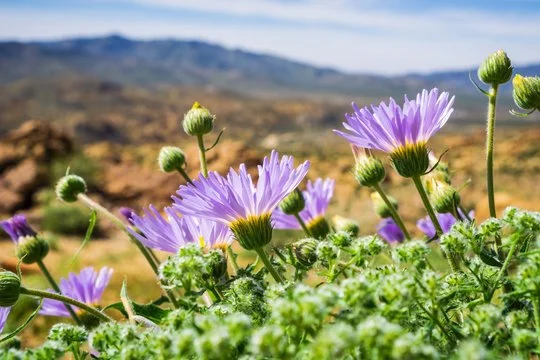
Most people associate the word “rural” with farms and bales of hay. I can suggest an association you may not have expected. Ridgecrest, where I’ve lived for the last 14 years, is a town of 28,000 in the Mojave Desert of California, a city that doesn’t produce crops but is home to a U.S. Navy base where the enlisted and Department of Defense (DoD) employees work on classified research and development projects, test planes (the weather is especially good for that), and develop technologies for soldiers. Ridgecrest is definitely rural both in how its people view the rest of the world and in its remoteness from services. The closest towns, with abundant medical services and shopping (Lancaster, CA, and Palmdale, CA), are 140 miles away roundtrip.
Living here has meant accessing my mental health care with my computer or phone. It’s not that there aren’t therapists and psychiatrists in Ridgecrest. It’s just that I’m very selective about doctors and doctors don’t always accept my insurance.
The small, regional hospital in Ridgecrest has an emergency room that takes psychiatric cases as well as a small counseling department with a psychiatrist who sees patients using telehealth available only at their office. Partly due to the remoteness of our community, our hospital has trouble attracting and retaining doctors.
Ridgecrest also has a Crisis Stabilization Unit (CSU) for 72-hour holds and various for-profit companies, such as Clarvida, that perform social-service type work for people with mental health issues and autism. The Navy and DoD have their own counseling resources to mitigate the stresses of military and federal work.
What Ridgecrest doesn’t have is an active National Alliance of Mental Illness (NAMI) chapter, but I’m working on that. See “Having a Sense of Purpose” below.
I lived in Ridgecrest once briefly in the 1990s and moved here again in 2011 – most recently because my mother had died and my siblings felt that someone should be near our father. By then, I had been married for about five years. It wasn’t entirely a move that we would have chosen for ourselves and I was unhappy for a very long time.
That said, I’ve finally learned how to make myself happier and perhaps it has to do with the stillness of this place. That and being diagnosed early and treated successfully for a life-threatening illness during COVID. The diagnosis was a red flag to me signaling that I wouldn’t live forever and that, in addition to being genetically predisposed to the illness, I had not helped myself by stewing in negative emotions for a while. I became severely depressed and unresponsive to my husband’s attempts to be supportive.
Four and a half years later, I have found my footing. I’m grateful for that.
Medication
When I was first diagnosed and treated for depression, I realized that my problems weren’t all caused by other people. I began to be able to maintain a stable address and was receptive to my future husband when I met him. Medication set the stage for me to make better choices.
Because relapses and medication changes come with the territory, it’s been critical for me to find a psychiatrist who listens deeply to me, is honest about possible side effects of medications, and treats me as a full partner in decision making.
Therapy
I’ve had great and patient therapists, people who have taught me a lot. Without their support, my life would have been much harder. I’ve found ways to deal with the barrier of cost. If a therapist doesn’t take my insurance, I ask if they will consider sliding scale fees. I have been willing to see therapists who are in training because that can also make therapy more affordable.
Exercise
For me, there’s nothing better than a 30- or 40-minute walk or a bike ride to get errands done. Exercise helps me clear my mind and improves my mood substantially. When I do it on a regular basis, it’s a key part of keeping me stable.
Sleep
Getting enough hours of restorative sleep is an ongoing challenge for me. I try to be off my devices at least one hour before bed, keep my bed time consistent, and use various relaxation techniques to help me fall asleep. However, sometimes no matter what I do, I have insomnia. In that case, it helps if I avoid getting upset and find relaxing things to do – reading, listening to streaming audio, etc. – until I’m sleepy.
Creativity
My thing is writing and enjoying music. Anything under the sun can be creative as long as the doer enjoys it.
Getting out of my own way
Having my mood disorder well managed and learning that life is finite have helped me enjoy life instead of being afraid of it.
It’s not always about me!
I can be a person who takes uncomfortable interactions personally and ruminate about them. Recently, I realized that most of these situations are not about me.
Having a sense of purpose
With the support of my county library system and local NAMI chapter, I give one-hour, monthly talks based on the NAMI Peer-to-Peer Program curriculum. I also have guest speakers. This format works better for my community than the longer format. Organizing the talks gives me a sense of purpose and I feel good when I‘ve connected a fellow peer to helpful information. These activities may lead to more NAMI activities locally or not, but I’m very proud of the five programs we will have completed by the end of May.
Relationships
Coupledom is not for everyone. However, I like working at a relationship. My partner has been very supportive to me through all my ups and downs and I can’t imagine life without him.
Sociability
When I want to hide, it’s generally a good idea for me to get out of the house. It could be to a park, the library, a museum, a café, or to a concert. Getting out begins to break the inertia of depression.
Author Bio
Sarah Wersan writes and speaks as a peer and mental health advocate for NAMI. She enjoys reading, movies, walking, and biking in the California Mojave Desert area. She is a native Californian who is fond of the spring wildflower blooms that blanket the hills in yellow, orange, and purple.